
The Red Rock Sunflower: Unique in Nevada
In the shadow of rock formations surrounded by the Mojave, a rare sunflower species found its niche in Red Rock Canyon. It is on a small patch of land, about one-acre, near two desert hot springs. The plant, known as the Red Rock sunflower (Helianthus devernii), grows nowhere else. It evolved and developed unique characteristics that have allowed it to survive in this microclimate.
Botanists describe plants like the Red Rock sunflower using the term endemic. These are native species that exist only in a specific geographic area. Endemics are highly specialized and the conditions favorable to their growth can be difficult, if not impossible, to reproduce elsewhere, making them highly vulnerable to extinction.
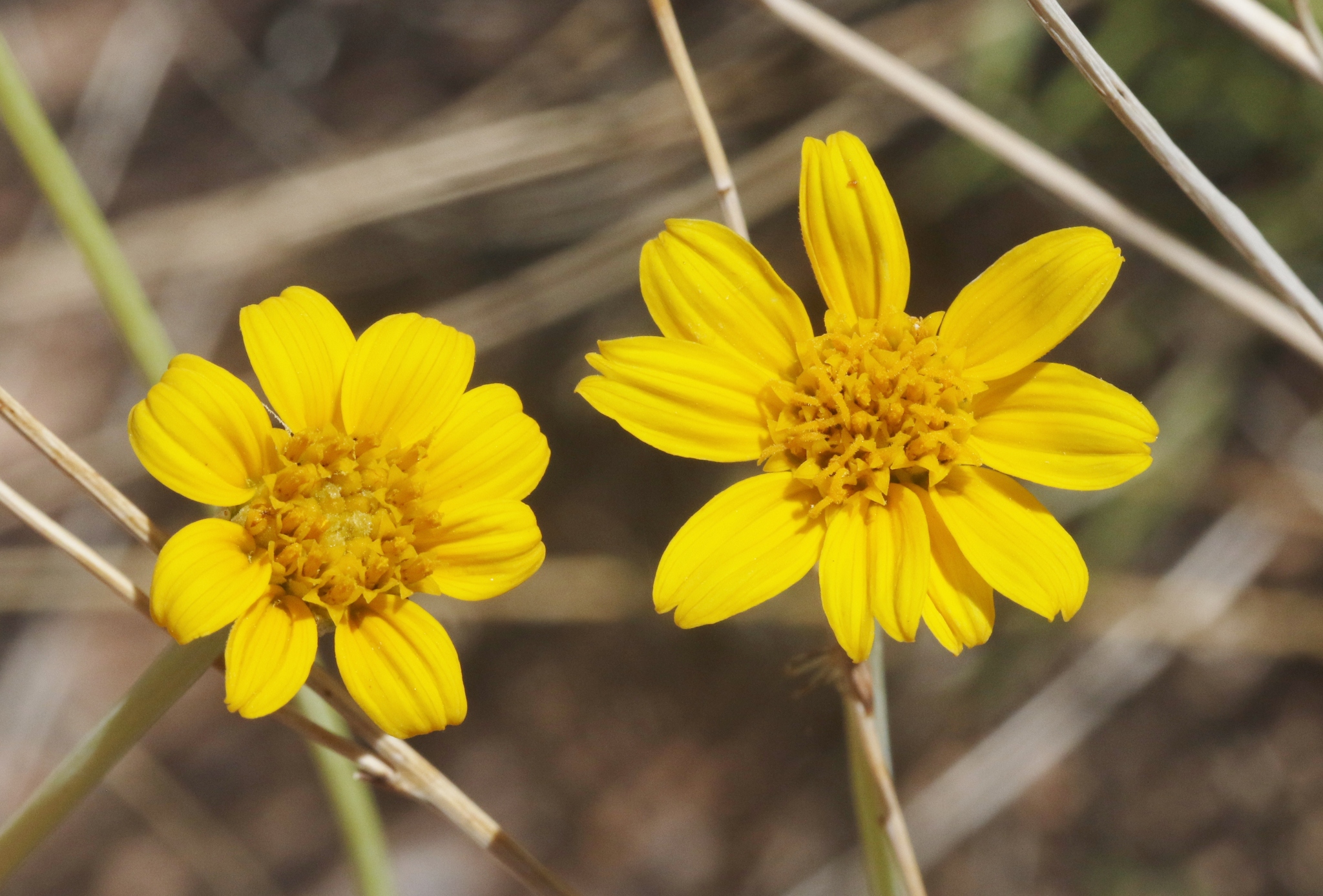 Red Rock Sunflower in bloom. Photo courtesy of James Bailey.
There are around 133 endemic plants in Nevada, according to the Nevada Division of Natural Heritage. Most are considered “vulnerable enough to extinction to be of conservation concern”. The state has acted to protect 25 of these, including the Red Rock sunflower, adding it to the List of Fully Protected Species of Native Flora in 2024.
Jamey McClinton, administrator of the Nevada Division of Natural Heritage, indicates that the Red Rock sunflower is “inherently vulnerable due to its highly restricted distribution.” The plant, as McClinton describes it, is “very distinctive and beautiful.” It also provides resources for pollinators in the summer and early fall, which is when it blooms. “That’s important, because by then, spring flowers are done.”
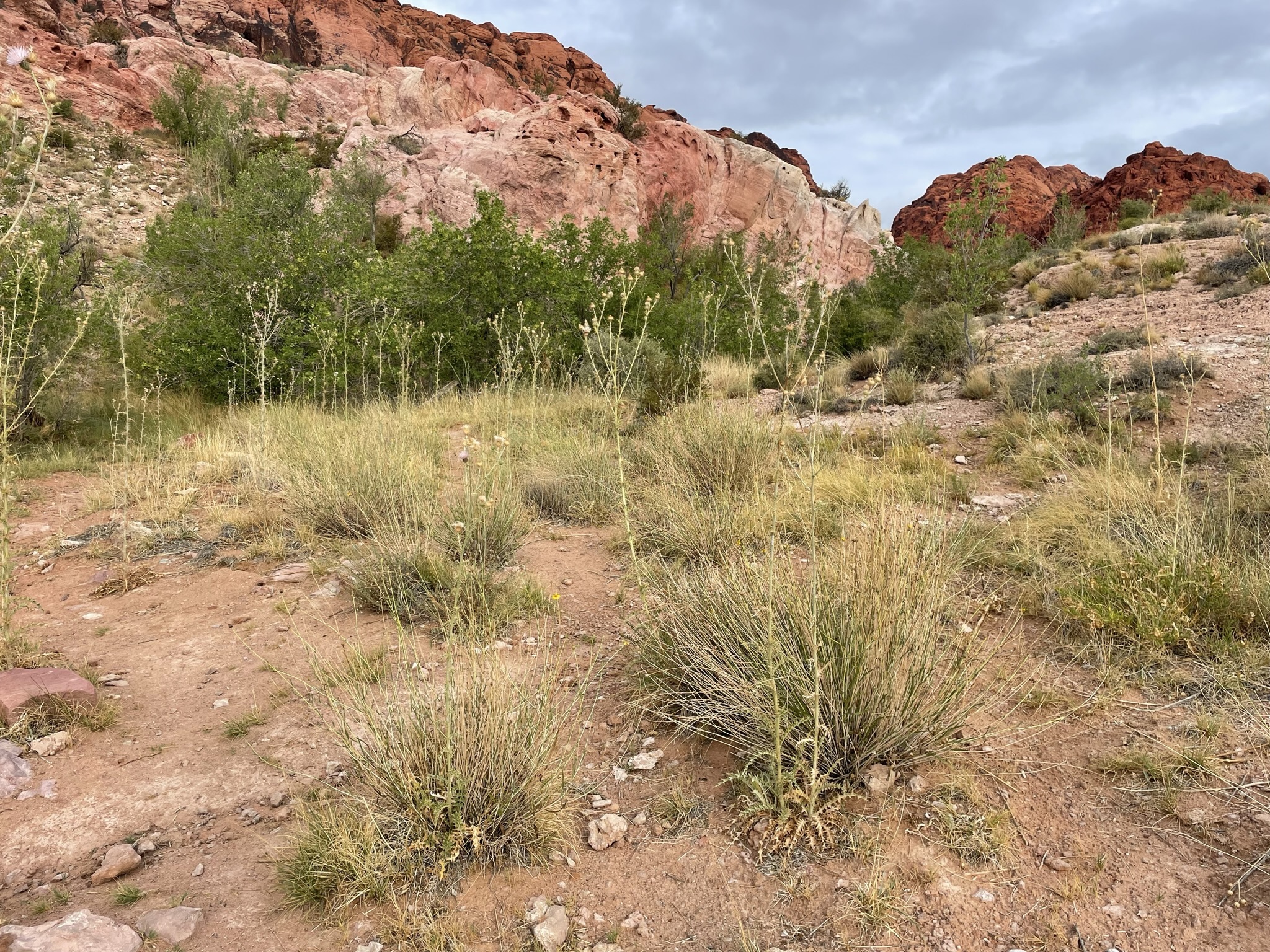 Red Rock sunflower plants. Photo courtesy of Matt Berger
But why is it in Red Rock Canyon? One reason may be Nevada’s unique geological characteristics.
“It’s a unique state. There’s a lot of interesting geological history here that has led to the development of unique and specialized species,” says Maddie Houde, protected plants specialist for the Nevada Division of Forestry. According to Houde, soils and moisture could explain why the Red Rock sunflower grows where it does.
“It is likely a mixture of moisture, temperatures and the soil characteristics that led to the species genetically and evolutionarily veering away from its related ancestors. Throughout the years, as it reproduced under these exact characteristics, the Red Rock sunflower emerged as a new species,” Houde suggests. This process is called speciation.
Soils can be an important factor in speciation, says McClinton. “Soils in the area are derived from Aztec sandstone. They are sandy, a little salty and well-draining and there’s consistent moisture because of the springs.” McClinton hypothesizes that the Red Rock sunflower could have specifically adapted to “some special properties in the soil, perhaps in combination with the consistent moisture from the springs, but the research that would allow us to know for sure hasn’t been done.”
Speciation may be subtle, even imperceptible to the naked eye, as it may only happen at the molecular level. But sometimes, slight structural differences can raise a trained botanist’s eyebrows. That was the case in 2007, when a botanist surveying the area spotted a sunflower he could not identify. Maybe it was the way the leaves attached to the stem, the shape of the flowers, or how it felt to the touch, but this plant was different enough. It took another 14 years to scientifically describe the Red Rock sunflower as a new species, based on morphological and genetic traits that differentiate it from other similar plants, like the little sunflower (Helianthus pumilus) or any other member of the Helianthus genus.
Most botanists spend their entire career without finding a new species, at least not knowingly, as Houde points out. “I’m sure I’ve passed new species without realizing it.”
In Nevada, that is a reasonable assumption. After all, the state ranks 10th in vascular plant diversity because of its unique geological and topographic characteristics. The alpine meadows, mountains, salt deserts, high valleys, plains and basins provide a wide variety of habitats for unique organisms like the Red Rock sunflower.
Note: A petition to list the Red Rock sunflower federally under the Endangered Species Act was submitted on February 10, 2026. It is worth noting that this plant is already protected at the state level in Nevada and that Critically Endangered Plant Laws (NRS 527.050) and Regulations (NAC 527.010) apply to all lands in Nevada, including federal lands.